_edited_%201a.svg)


Pool cleaning in Mount Pleasant, SC: it’s not always easy. And, it’s not always fun.
But, when pool season arrives, you better believe that we have some of the best weather in the country for swimming. And all that cleaning and maintenance is worth it when you’re hanging with your favorite people poolside.
All the more reason to get your cleaning and maintenance checklist up to date, so that you’re ready for when swim season arrives.
Charleston Pools and Service here: if your Mount Pleasant pool needs a little tender loving care, you’ll want to stick around and read our seasonal pool cleaning checklist.
Join us! If you’re wondering how to clean and maintain your Mount Pleasant pool, this article was made for you.
In this article, we’ll discuss:
- Why Mount Pleasant pools require detailed maintenance
- Your swim-ready weekly pool cleaning checklist
- Preparing and caring for your pool in spring
- Maintaining your pool during summer
- Safeguarding your pool during hurricane and storm season
- Fall and winter-season pool care
- When to call a professional for seasonal pool service and pool maintenance
- What to expect from your pool service company
- Frequently asked questions (FAQ) related to pool cleaning and maintenance
Why Mount Pleasant pools need a detailed maintenance routine
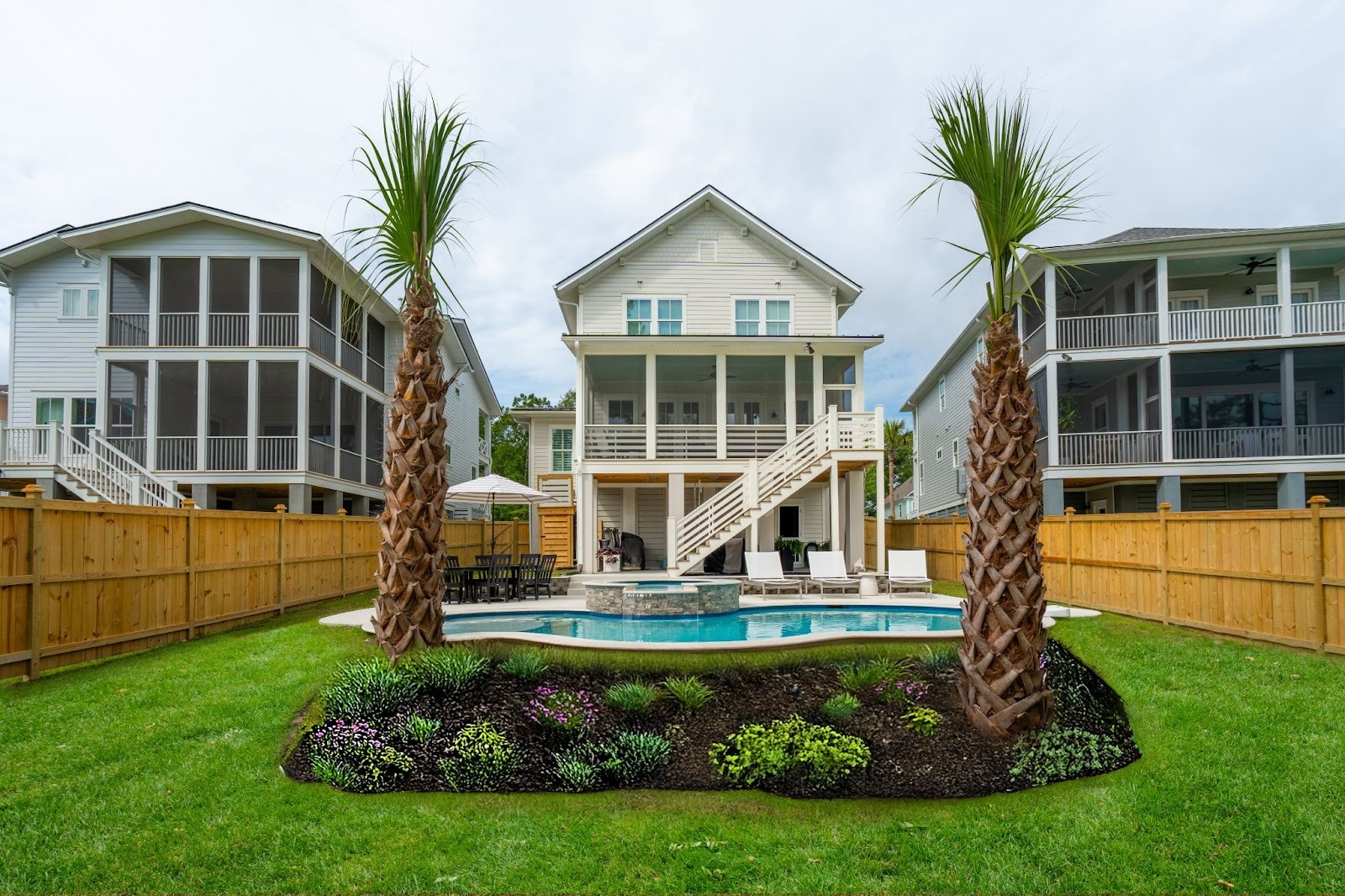
The reason why Mount Pleasant pools need detailed maintenance is because of the Lowcountry’s inclement weather. Heat, sun, storms, pollen, and debris can affect water quality.
For example, hotter weather sets the stage for bacterial growth and lower oxygen levels. When bacteria grows, algae can form around the rim of pools, particularly in concrete and gunite pools.
What’s more, stormy weather can throw more pollutants, debris, and pollen into the air, which can cause cloudy, yellowish water that’s toxic to humans.
Given the Lowcountry’s varied weather cycles, regular, detailed maintenance is needed to ensure a clean, long-lasting, and stress-free pool experience.
That’s right: The right care starts with a crucial, but much-needed task, checking off your weekly pool-cleaning to-do list.
Your all-in-one weekly pool cleaning checklist (the non-negotiables)
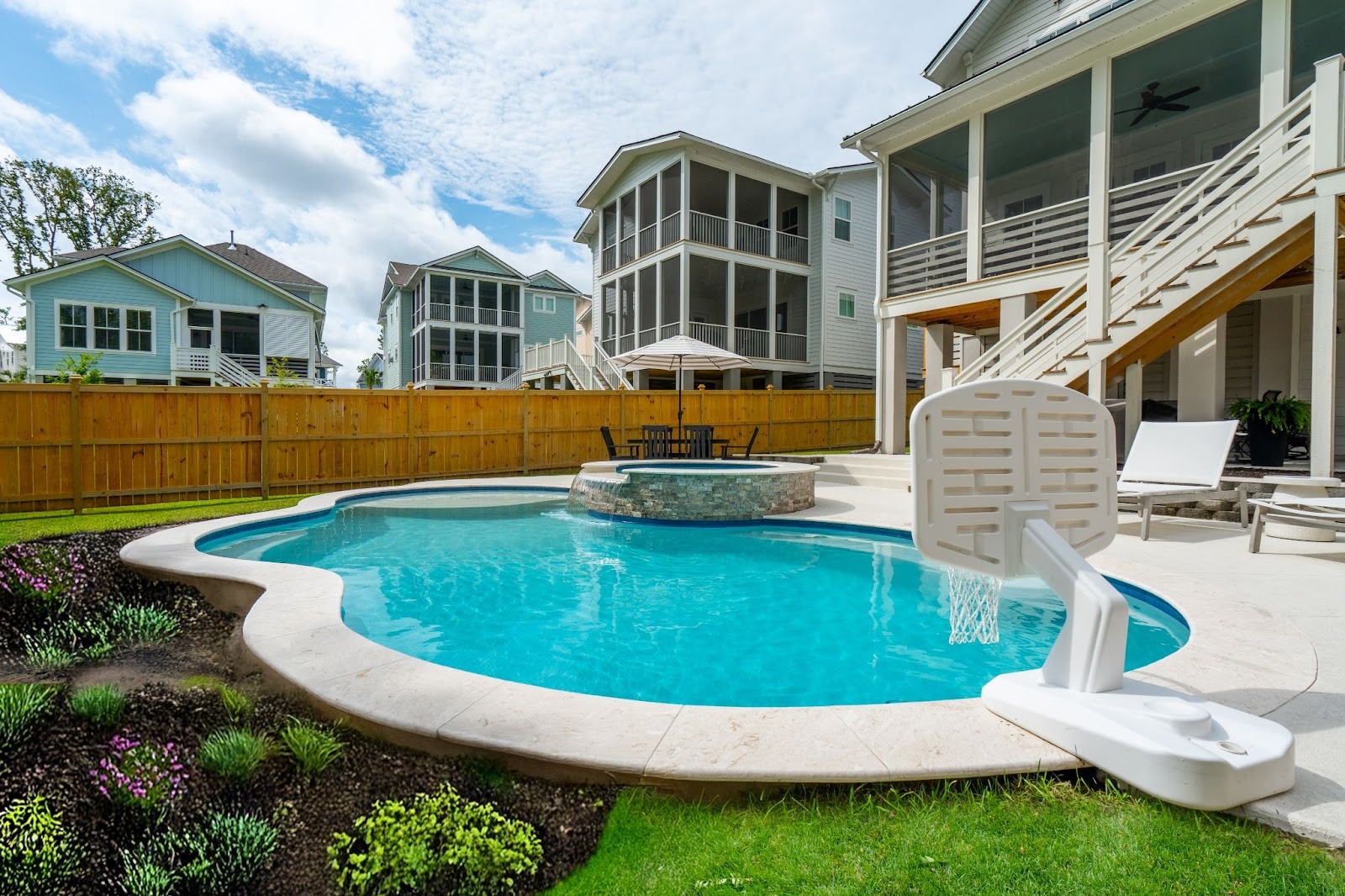
Mount Pleasant pool owners: here’s a weekly pool cleaning checklist that will keep your pool looking and feeling clean and safe.
- Step 1: Test the pool water to assess current chemical levels. Turn off your system and close valves around your pump to prime your pool pump. Doing so will allow you to empty the skimmer and pump baskets, as well as prepare the vacuum to limit the chance of debris being stuck in the pump.
- Step 2: Isolate suction to one skimmer if possible, as doing so will help you keep your pool clean. Connect your vacuum head, vacuum hose, and pole, ensuring no kinks in the hose. Place the vacuum head in the pool, hold the end above the water, and insert the end into the skimmer below the skimmer basket. Then, start the vacuum up.
- Step 3: Brush the pool walls and steps with your vacuum. Alternatively, you may also use a robotic pool vacuum to clean your pool’s surface. Continue cleaning until all debris is either vacuumed or set at the main drain for the filter to pick up. Backwash your filter, and empty your skimmer and pump baskets.
- Step 4: Test the chlorine and salt, pH levels, alkalinity, and calcium using pool shock, water sanitizers, water balancers, phosphate removers, algaecides, and filter cleaners.
- Step 5: Check your pool equipment and ask yourself the following questions. Is the pool pump emitting a soft, steady hum? Is the water flow strong, or do you notice low pressure? Is the water dirty or cloudy? How about leaks? Are the seals worn, the fittings loose, or the housing cracked? Consider reaching out to a Mount Pleasant pool repair team pronto if you notice any of the above-mentioned items.
To ensure a clean pool, follow this 5-step process every week to keep the water balanced and the filtration system clean. Doing so will ensure a healthier and safer experience in your swimming pool.
Essential tasks for pool cleaning
- Vacuum your pool weekly
- Skim the pool
- Empty the skimmer and pump baskets
- Test water chemistry
- Backwash the system
Spring in Mount Pleasant: Pollen, debris, and early algae pressure
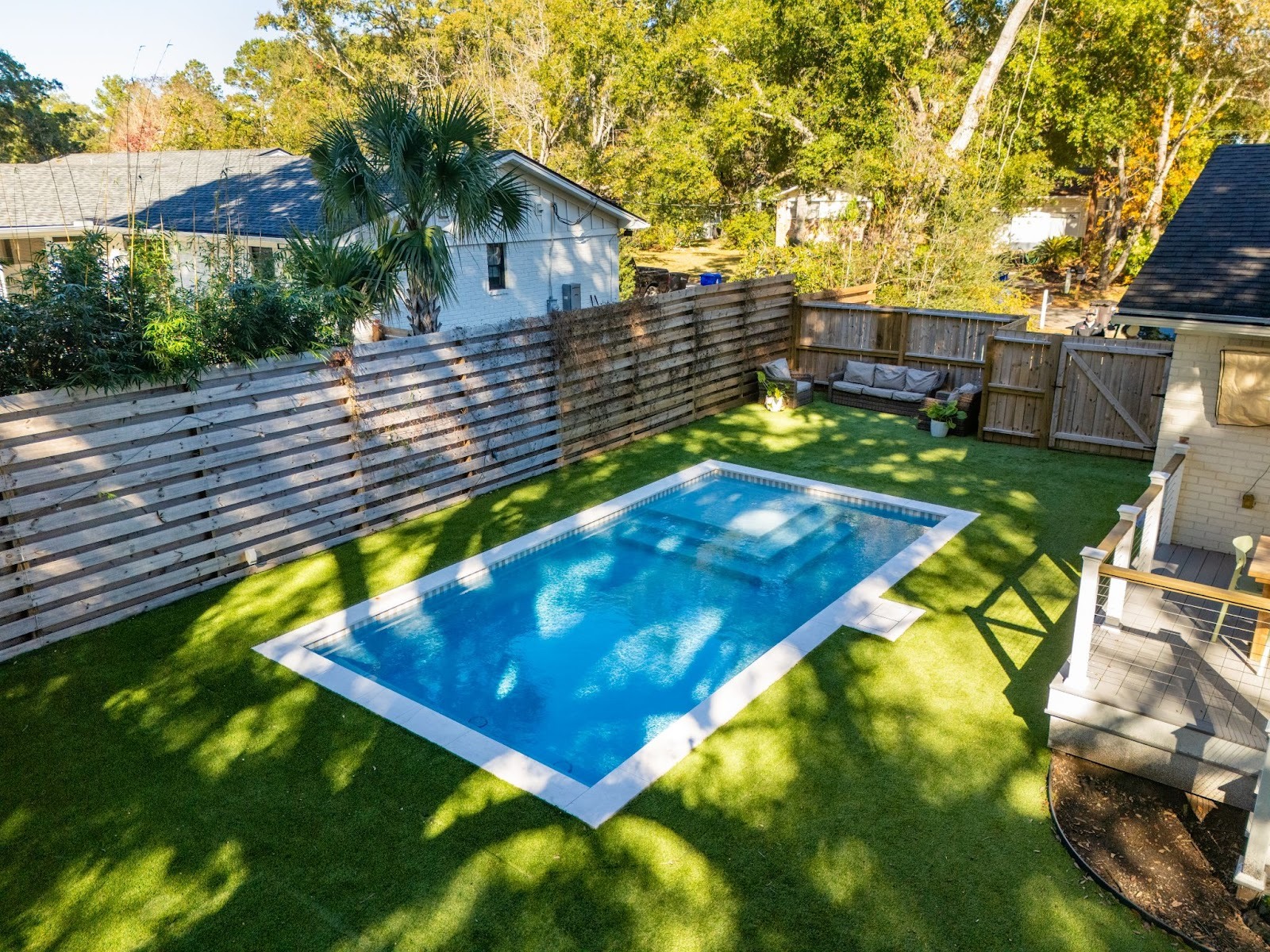
Considering that summer is peak swim season, spring is the time to prep your pool for summer. And that’s because pollen can wreak havoc on a pool. It does so in two specific ways:
- Physical infiltration of the pool: Tiny particles fly into your pool and land on the water’s surface, which can form an ugly, unsightly dark green hue in the pool.
- Algae blooms and bacteria growth: Organic debris, like fallen leaves and pollen, can introduce a variety of challenges, which can create breeding grounds for algae and bacteria.
To prevent pollen, debris, and algae blooms from occurring, we recommend the following:
- Conduct more frequent basket cleaning and skimming. Doing so will ensure the filter doesn’t get clogged and keep the pump from working harder to push water through the filter.
- Keep tabs on water filter pressure to ensure that the sticky contaminants don’t clog the filter or reduce the available space for water to pass through the filter.
- Consider checking a reliable data source for pollen counts in the air. For example, the American Academy of Allergy, Asthma, and Immunology (AAAAI) provides accurate and authoritative information on pollen counts in the Charleston, South Carolina region. Before swimming, check AAAAI for up-to-date information on pollen counts.
Lowcountry summers: Heat, heavy use, and faster chemical burn-off
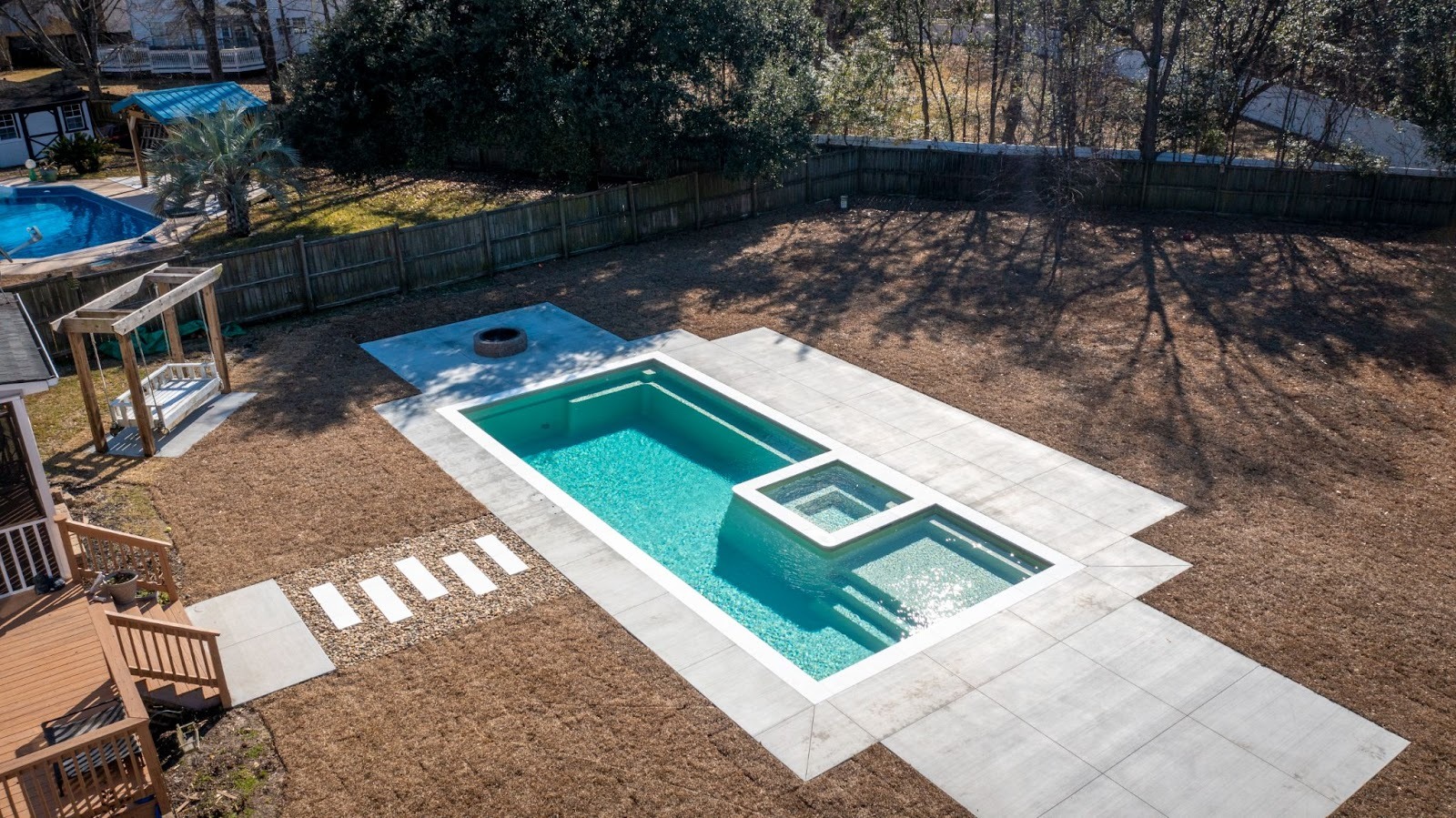
Summer in the Lowcountry is prime pool season. As you use your pool more often, and as the heat index continues to climb, your pool’s chemicals break down much faster.
Because of high heat, humidity, and pool use during the summer, we recommend the following:
- Testing the water quality of your pool at least two to three times a week.
- Shocking your pool at least once a week
- Increase your pump’s run time for 8-12 hours a day during the hottest days of summer.
Failing to keep your pool water clean will result in what’s called “cloudy water.” Cloudy pool water usually means that your pool has a higher-than-normal concentration of bacteria and algae in it. Slimy, tinted, or smelly pool water indicates that your pool might be overrun by bacteria or algae.
If needed, consider enlisting the help of a professional pool cleaning service to help balance your water’s chemistry and ensure it’s free of nasty bacteria.
You’ll be on your way to summer swimming in no time.
Storm season: Preparing for seismic rain or wind events
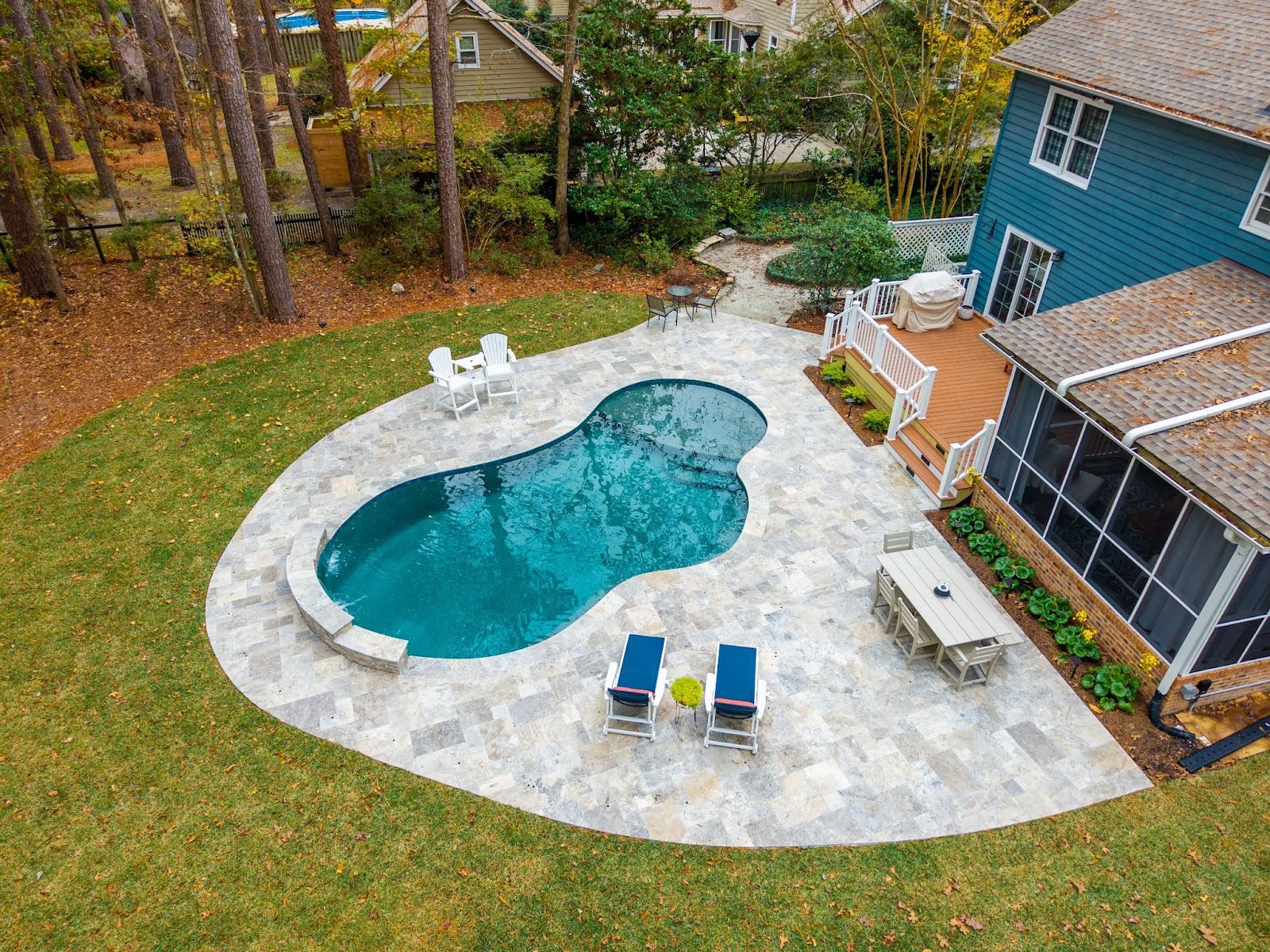
The Atlantic Hurricane Season officially starts on June 1st and ends on November 30th, according to the South Carolina State Climatology Office. That means just before summer is also the best time to prepare for storm season.
Here’s what you should know about prepping your pool for storm season in the Lowcountry, both pre-storm and post-storm.
Pre-storm preparation
A good defense is the best offense, as the saying goes. To prepare your pool for a storm, consider the following:
- Don’t drain your pool: Contrary to popular belief, you might believe draining your pool will help prevent pool water from overflowing. Nevertheless, doing so will leave your pool walls and floor unprotected, making them susceptible to scratches or damage via airborne debris. Also, without water, the pool may pop up due to the rising water table.
- Keep your pool filled: Balance and control your pool water.
- Don’t leave your pool covered: Airborne debris can puncture the cover, and winds may blow the cover over.
- Turn the power off: Doing so will help prevent electrical issues.
- Cover all pool equipment: Do your best to cover essential pool equipment that could be damaged by heavy rain or gusty winds.
Post-storm preparation
After the storm has passed, it’s time to spring into action. To clean up your pool after a storm, consider the following:
- Remove any loose debris: Chances are wind, debris, tree branches, and other objects may have succumbed to an untimely death during the storm and have chosen your pool as their resting place against your will. Jokes aside, make sure to clean up said debris to ensure a healthy and clutter-free pool.
- Test and rebalance your water: Your water quality will likely be mixed with the debris, bacteria, and detritus that’s landed in your pool. Test and rebalance your water to ensure a safe, clean, and healthy swim experience.
- Inspect equipment: Prepare yourself for the worst. If your equipment is damaged, create a game plan for how to fix it. You can always reach out to a pool repair team with the experience, tools, and knowledge to help in post-disaster recovery situations.
Fall and winter: Simple, safe protection is key
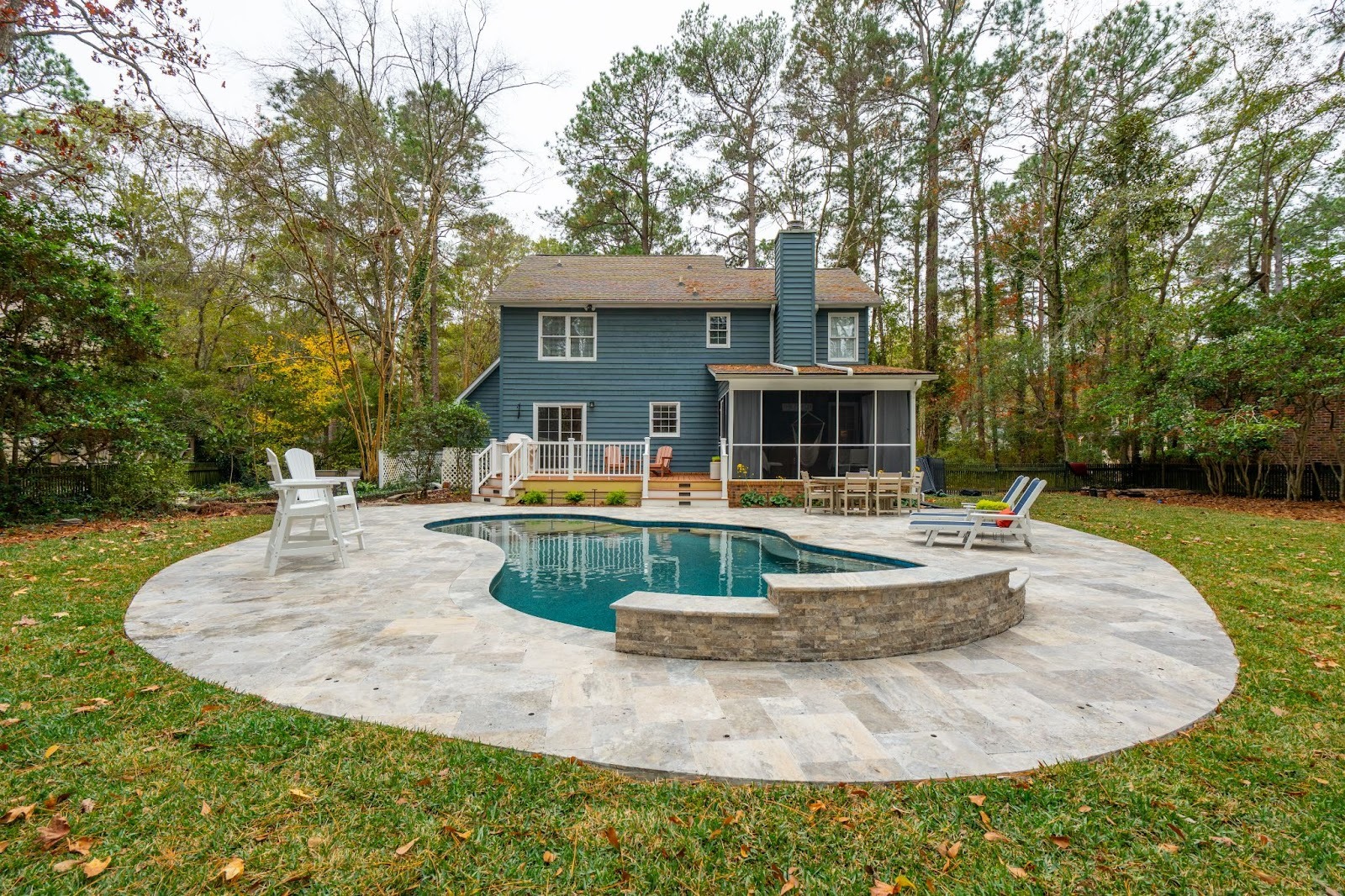
After the dog days of summer are over, fall and winter means it’s time for consistent, simple, and regular pool protection. Though people may not be swimming as often, you’re not off the hook for treating your pool’s chlorine or your water’s pH levels.
Pool cleaning is still a must.
Pool maintenance and cleaning for fall and winter includes the following:
- Balance your pool chemistry: Algae growth and chemical imbalances do not discriminate based on the season of the year. Test your water regularly, ensuring the pH, alkalinity, and sanitizer levels are balanced.
- Reduce filtration times: During cooler months, you don’t need to run your pool’s filtration system as long. As a general rule of thumb, you should check your manufacturer’s instructions for how long to run your pool’s filtration system, but most pools only need six to eight hours of run time.
- In freezing temperatures, run your pool pump 24/7: Though temperatures 32°F or below are infrequent in the Mount Pleasant area, you’ll want to keep your pool pump running to ensure water circulation and to prevent pipes from freezing or equipment from breaking.
For helpful tips on keeping your pool clean during freezing weather, check out this quick infographic.
Red flags: When it’s time to call a pool pro
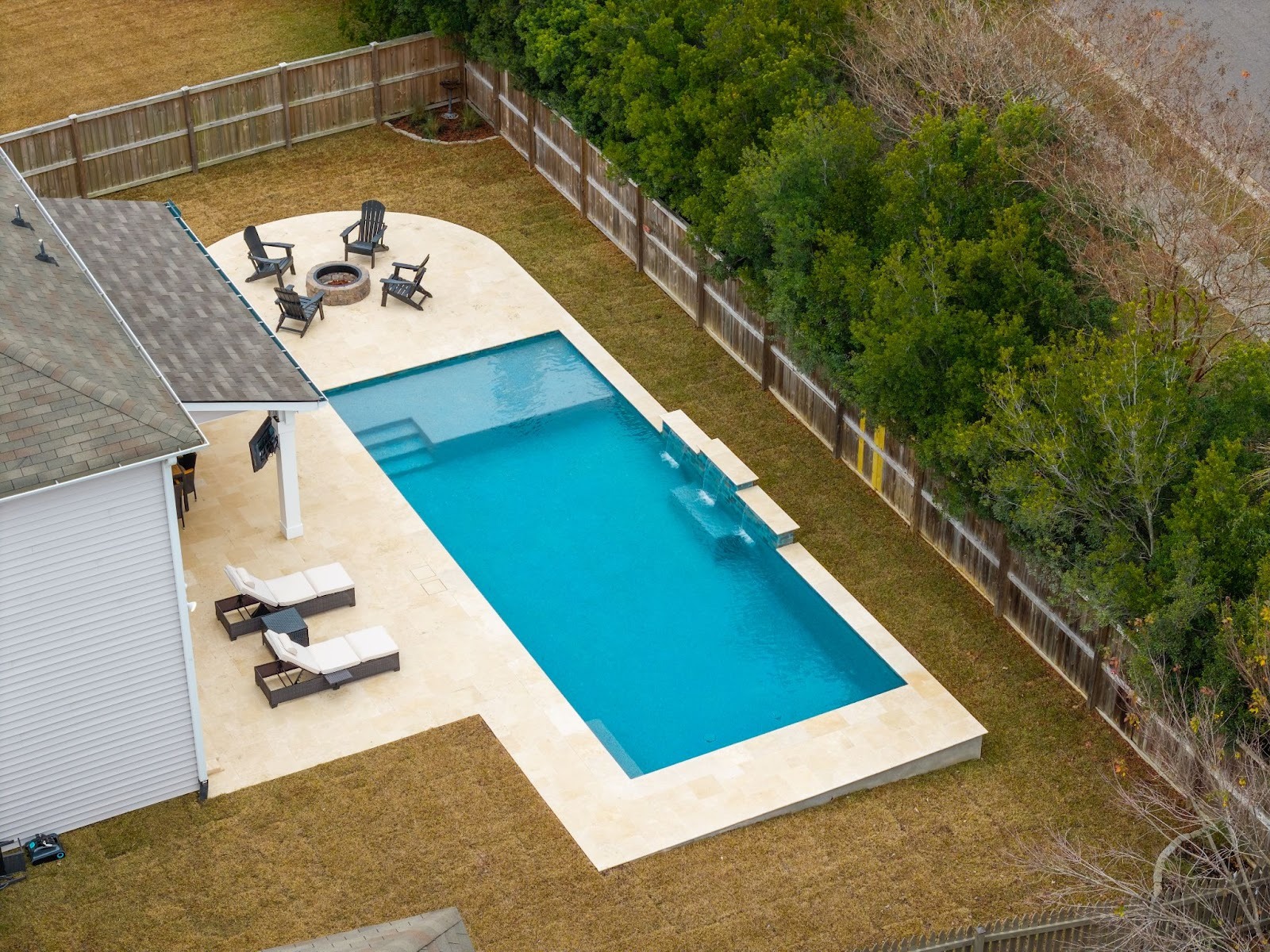
Let’s say you’ve followed your pool cleaning and maintenance seasonal checklist, but your pool still isn’t looking the way you want it. You’ll know it’s time to call a pro if you notice any of the following issues:Tie directly to your service capabilities:
- Leaks: If you notice that your water level is dropping more rapidly than normal, your pool might be leaking. Consider reaching out to a pool maintenance team to diagnose and resolve the source of the leak.
- Weak circulation or a noisy pump: If you hear strange noises coming from your pump, your pool could be blocked or malfunctioning. Reach out to a pool professional to ensure no lines are obstructed, no mechanical wear or tear has occurred, and water circulation is at the right level.
- Filter pressure issues: If you’re finding debris in your pool despite cleaning your pool, you may be dealing with filter issues or even equipment failure.
- Heater not performing: If you notice the pool heater isn’t turning on, is giving you error codes, is leaking, won’t shut off, emits dark exhaust, or makes strange noises, consider purchasing a new pool heater or troubleshooting with the help of a pool repair team.
- Consistent algae or cloudy water: Before reaching out to a pool repair team, consider the weekly checklist above. If, after following all items on the checklist, you still have issues with your pool, reach out to a pool pro for timely pool service.
What a pool cleaning and maintenance visit covers
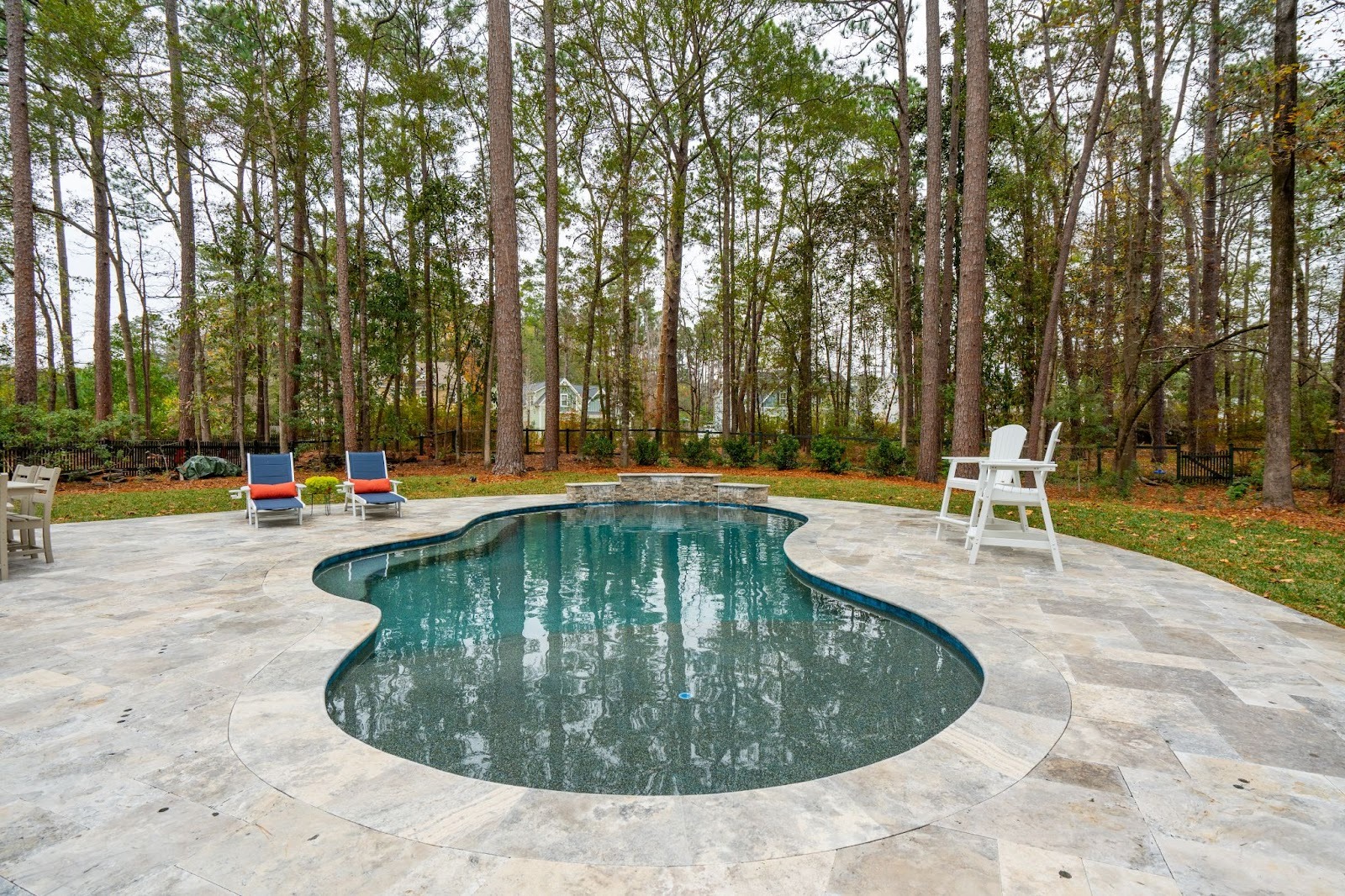
Freeform pool surrounded by tall trees and travertine deck.
Pool contractors provide different maintenance plans to give customers options for pool care. For example, at Charleston Pools and Service, we provide three tiers of maintenance:
- Basic maintenance plans
- Premier maintenance plans
- Platinum maintenance plans
With our basic maintenance plan, we’ll check your chemistry (for example, chlorine, pH, Calcium, Alkalinity, Stabilizer) and add pool treatment chemicals as needed each week. We’ll also add a weekly dose of pro-blend enzyme and phosphate treatment.
With our Premier and Platinum maintenance plans, we’ll provide you with weekly and bi-weekly deep cleaning and maintenance, including:
- Clean strainer baskets
- Filter cleaning
- Vacuuming
- Brushing walls and floors
- Bi-weekly skim of pool surfaces
Each visit includes quick, long-lasting fixes that are built with precision and care to fit your unique outdoor needs. In essence, we’ll take a look at the following key areas of pool cleaning and maintenance:
- Leak detection
- Equipment replacement (if needed)
- Equipment troubleshooting
- Hydraulic troubleshooting
Get a quick quote for Mount Pleasant pool cleaning and maintenance
If you live in the Mount Pleasant area and are looking for pool maintenance for your pool, reach out to us.
Our team has worked on more than 1,500 pools in the Charleston, SC area in the last eight years alone, and we’ve provided regular maintenance, water testing, and pool cleaning for thousands of Charleston-based customers.
And yes, we do maintenance on all types of pools.
From gunite to fiberglass pools, we provide end-to-end maintenance service for all your backyard pool needs.
Whether you need comprehensive pool maintenance, a little extra pool shock, or advice on how to prevent algae growth, let our pool pros handle the job. Contact us today for a quick, complimentary quote on your Mount Pleasant pool maintenance job.
Frequently asked questions (FAQ) about pool cleaning and maintenance
1. How often should I get pool cleaning in Mount Pleasant, SC?
During spring and summer in Mount Pleasant, we recommend receiving pool cleaning at a minimum of once per week. When the weather becomes warmer, you should clean your pool about two to three times per week.
2. What’s included in weekly pool maintenance?
Weekly pool maintenance includes the following:
- Balancing water chemistry with pool cleaner agents, like chlorine tablets and more
- Checking waterlines for sediment and debris
- Providing regular dosing of pro-blend enzyme and phosphate treatments
- Equipment replacements and cleaning
- Vacuuming
- Skimming pool surfaces
- Keeping water clear of bacteria
3. How do I prevent algae in warm, humid weather?
If you notice an exorbitant concentration of green water in your pool, you might have algae on your hands. To prevent algae, try the following:
- Keep water circulating by running your pool pump for about eight to 12 hours a day.
- Maintain your filtration systems by backwashing filters. Doing so helps remove contaminants and keeps water clear of algae.
- Check for blockages in skimmers, return jets, and pump baskets. If needed, remove leaves or debris.
4. How often should I clean or backwash my filter?
We recommend cleaning and backwashing filters at least once a week during swim season. Cartridges should be removed and rinsed every two to six weeks. Nevertheless, the amount of time to clean or backwash your filter depends on the size of your pool and how often it’s used.
5. What causes low water flow from pool returns?
Low water flow is often caused by clogged pool equipment like pump strainer baskets, skimmer baskets, filters, impellers, or other equipment. Underground leaks in the pool lids can also be the culprit.
6. When should I schedule leak detection for a pool?
You should schedule leak detection if you notice any of the following in your backyard pool:
- Lower water levels that can’t be attributed to normal evaporation and weather patterns
- Standing water or soggy grass around your pool
- Cracks or fissures anywhere near the pool
7. Is weekly pool service worth it if I don’t swim every week?
Most definitely. Even if you don’t swim each week, weekly pool service can protect your pool against algae blooms, equipment malfunctions, and water imbalances that can lead to costly repairs.
8. What are the signs that my pool pump is failing?
You can tell that a pool pump is going bad if you notice any of the following signs in or around your pool:
- Decreased water flow
- Unusual noises (like grinding, rattling, or screeching) coming from the pool pump
- Leaks from the pool pump
- Challenges priming the pump
_edited_%201.svg)


